
Utilizing research-based techniques learned at the Mount, Brooklyn Brunner successfully guided her diverse students to English fluency and academic confidence.
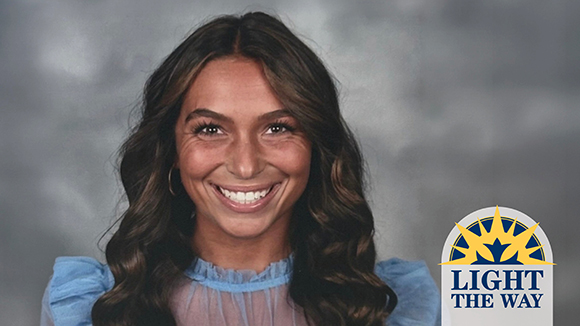
Brooklyn originally intended to teach in a high school setting. It was Cynthia Shibinski, M.A., who has just recently retired this semester, who inspired her to pursue early childhood education. Following Brooklyn’s decision to pursue a dual major in secondary education and special education, Shibinski became her advisor, and changed the course of her career.
“She saw something in me before I saw it in myself and helped guide me toward early childhood education,” Brooklyn reflects. “She taught me how to build strong relationships with students, manage a classroom with confidence, and create a positive and supportive learning environment.”
Brooklyn credits Shibinski for helping shape her teaching philosophy, and feels that Shibinski has had a significant impact on her career and life as a whole.
Another person who has had a tangible impact on her life is her friend Brooke, a nursing major who played on the women’s volleyball team with her, who she lived with for all four years at the Mount. “Whether I was preparing for teaching exams, working through lesson plans, or trying to problem solve challenging situations with students, she was always there to support me,” Brooklyn reflects.
Applying Mount Experiences to Meet Diverse Student Needs
The combined support from Shibinski, Brooke, and the Mount Community as a whole has led Brooklyn into a second grade classroom at Five Points Elementary School in Springboro, Ohio, where she teaches all subjects. This year, she taught a class of students with a range of cultural backgrounds, where multiple students couldn’t fully understand or speak in the English language. “I had students who could not read a single word of English in one minute,” Brooklyn says. But now in the 4th and final quarter of the school year, these same students are now able to read sixty words of English in one minute.
“I just tested them this week and it brought a smile to my face to see the students get so excited that they were able to beat their goal for the year.”
Brooklyn reminisces another instance where she got to see her students improve and shine, but in a classroom activity rather than on a summative test. The students had to give presentations on an inventor of their choice—it was more of a project-based learning assignment she facilitated. The students conducted research on an inventor independently, then presented their findings to the class using a slideshow. The students were ecstatic to share their hard work.
“The moment came for the students to give their presentation, and the students formed a big circle around them, their faces smiling with joy and their eyes tearing with happiness,” Brooklyn recalls. The students read every slide on their own with great fluency, not stuttering or asking for help once, feeling proud of what they had accomplished. “All the students stood cheering, knowing that this student had done something they had never done before. In that moment, I could not help but tear up.”
The students had gone from being unable to read one word of English in one minute at the start of the year, to being able to deliver an entire presentation in English by the 4th quarter of the school year. “Hearing the student not know how to read at the beginning of the year, to now being able to give a presentation, was the reason why I wanted to be a teacher,” Brooklyn declares. “I wanted to see students grow and get better in areas where they are weak.”
Lighting the Way With Research-Based Instruction
Brooklyn’s teaching style is facilitated through tailored lessons to meet individual needs through proven teaching methods. By using research to inform her instruction in a supportive and structured learning environment, Brooklyn has been able to meet the diverse social-emotional needs of her students.
The research-based strategy of explicit instruction, a critical concept instilled within all Education students at the Mount, is a core component of Brooklyn’s classroom instruction. She describes her explicit instruction strategies, stating, “I rely on structured, explicit teaching, especially in reading, where I model skills clearly, guide students through practice, and then give them opportunities to apply what they’ve learned independently.”
Brooklyn has therefore ensured to create an environment where her instruction can be as effective as possible. “I create a supportive and structured learning environment where expectations are clear and routines are consistent,” she explains. “This allows students to focus on learning and feel confident taking risks.”
Facilitating Student Growth Beyond the Classroom
Flat Stanely by Jeff Brown is about a boy named Stanley Lambchop who gets flattened after a bulletin board falls on him. Stanley, now completely flat, learns to make the best of his situation; he slides under doors, flies like a kite, and more. At one point, he is mailed to a friend, leading to new fun and adventures. By the end of the book, Stanley, although finding a way to return to normal, learns that being flat is fun, and that you can make the most out of any situation with enough creativity and problem-solving.
Brooklyn connected Flat Stanley to her time at the Mount, and used it to inform a learning opportunity that will always stick with her students.
During her time at the Mount, Brooklyn had the opportunity to travel to Italy on a service learning project with sports management majors. The experience stuck with her, and she wanted to share that experience of seeing a new place to her students. Accordingly, she reached out to some connections and started doing a “Flat Stanley” project for her class each school year.
“The students had to select a place to mail a Flat Stanley they made, and I would send a class Flat Stanley abroad,” Brooklyn says. Last year, the first year Brooklyn began assigning the Flat Stanley project, she sent the class Flat Stanley to a school in Italy—where she went as a MSJ student. “A fifth-grade class took Stanley all around their school and showed us what it was like as a fifth-grade student living in Italy,” she recalls. “My students learned about the culture, weather, environment, things to do, languages, subjects, etc.”
By the end of the project, the fifth-grade class in Italy sent Stanley back, and Brooklyn’s class had the opportunity to have a Zoom call with the students in Italy.
“My students were so excited about this opportunity, and I knew I had to keep doing the project,” Brooklyn says. This school year, Stanley was sent to Dubai, with plans to repeat the same process and zoom call with a classroom in the United Arab Emirates. “The Flat Stanley project abroad not only strengthens their academic skills, but it also helps them grow as thoughtful, curious, and globally aware individuals,” says Brooklyn. “It is one of those experiences that truly sticks with them.”
Through the Flat Stanley project, Brooklyn has taught students lessons about being curious and globally conscious individuals, that extend far beyond the doors of the school.
Though she has stepped away from it in this past year to focus on earning her M.A. in Curriculum and Instruction, Brooklyn also helps students grow outside the classroom by coaching a club volleyball called Elevation with 16-year olds. Through coaching, Brooklyn aims to teach students in ways that extend beyond the court.
“I focus on helping my athletes grow into confident, resilient, and supportive individuals,” Brooklyn says. “I want them to leave not only as stronger players, but as better teammates, leaders, and people.”
She has watched her athletes grow as individuals by facing adversity, whether it be injuries or challenges in their personal lives, with strength and compassion. Her athletes would support each other, creating moments that would remind Brooklyn why she decided to start coaching in the first place. “They showed up for one another, both on and off the court, and created a team culture built on trust and care,” Brooklyn reflects.
Through intention and compassionate care, Brooklyn Lights the Way by showing up for the students she cares for beyond the classroom door.
Interested in the Mount’s Education Program?
Mount St. Joseph’s School of Education has a long history of equipping future educators with the ability to understand and meet the needs of students in the classroom. The School of Education equips its aspiring educators with an understanding of how to use research-based instructional strategies in their teaching, and create a safe and supportive learning environment capable of facilitating student growth inside and outside the classroom. The School of Education offers a range of degrees, and boasts a staff of professors who are always ready to support their students. To learn more about what the Mount’s School of Education has to offer, click this link!